New exhibition: Settling the Language
Posted on June 5, 2015 @8:43 am by Chelsea Shriver
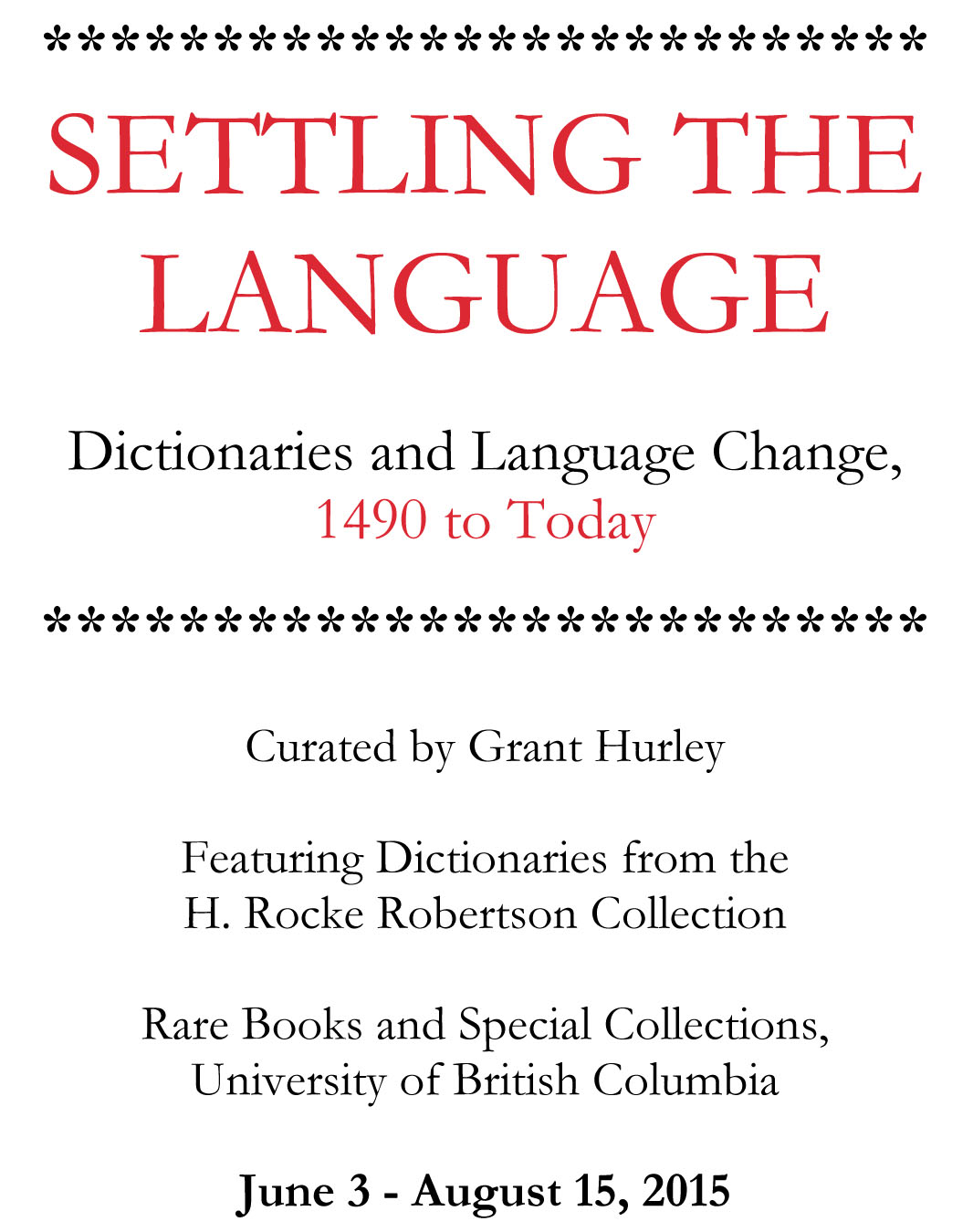
We’re very excited to welcome a new exhibition to Rare Books and Special Collections!
The exhibit, Settling the Language: Dictionaries and Language Change, 1490 to Today, is being mounted in support of the Dictionary Society of North America and Studies in the History of English Language conferences being held at UBC from June 5 to 7. The exhibition, curated by Grant Hurley, an MAS/MLIS student at SLAIS, will run until August 15.
Featuring items from the H. Rocke Robertson Collection of Dictionaries and other materials at RBSC, the exhibit celebrates the many forms of dictionaries. It includes 32 items, from early Latin and polyglot dictionaries, to the vital materials for Indigenous language revitalization, which all work in curious and contradictory ways to both fix, or settle a language. Brought together by the immense work of H. Rocke Robertson and other donors to RBSC’s collections, we hope you will enjoy the complicated and fascinating tales these texts tell us about our languages, identities, and linguistic ancestors. You can download the exhibition catalogue here.
You can visit the exhibition, which is free and open to the public, Monday through Friday, 10 a.m. to 4 p.m. at Rare Books and Special Collections on the first floor of the Irving K. Barber Learning Centre. For more information, please contact Rare Books and Special Collections at 604 822-2521 or rare.books@ubc.ca.
No Comments
The Changing Written Word
Posted on May 22, 2015 @10:22 am by Chelsea Shriver
In honour of our new exhibition, Papal Parchments and Blackletter Books, here’s a lesson on the history of the written word and why the text you’re reading now looks the way it does. Thanks so much to the exhibition’s curator, Robert Makinson, for this fascinating look back.
The Changing Written Word
The alphabet used by Western European languages today, including English, French, German, Spanish, Italian, and many others, is usually called the Latin alphabet or the Roman alphabet because it was first used by the ancient Romans to write their language, Latin. But although the letter forms may look familiar, they wrote their books very differently, so differently that they are nearly unintelligible to modern readers:
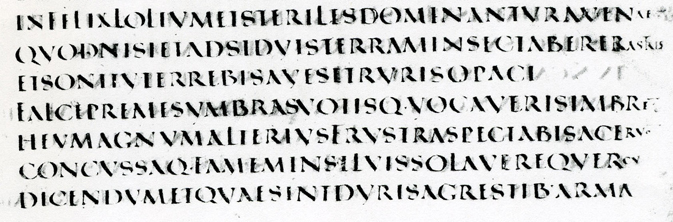
Rome, BAV, Vat. lat. 3256, fol. 3v
This image, taken from a reproduction of a Latin copy of Vergil from the fourth century, was produced during the later Roman Empire. While we can make out individual letter forms, such as the first seven letters spelling out the Latin word INFELIX (“unfortunate”), the text is very difficult to parse and read; this is because there are no spaces between words, no punctuation, and the letters are all majuscule, like our modern uppercase alphabet.
Four hundred years later, books would look very different. During the time of Charlemagne (c. 748-814), the emperor of the Franks (ancestors of the French), a new script was developed that was specifically designed for easy reading. Called Carolingian minuscule or Caroline minuscule—minuscule letters look like today’s lowercase alphabet—it allowed manuscripts to be produced with much fewer errors and eliminated much misunderstanding among readers.
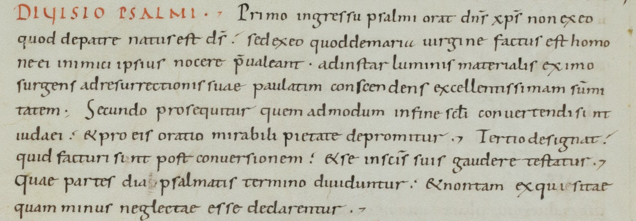
St. Gall, SB, CSG 201, p.48
Many familiar features are starting to appear: there are spaces between words and some punctuation is present. But most importantly, distinctions are made between majuscule letters, found in titles and at the beginning of sentences and phrases, and the minuscule letters present everywhere else. These minuscule forms are very similar to the forms used by most modern fonts, and Caroline minuscule would dominate European books for nearly four hundred years, even inspiring the script used by the papacy for its official documents like papal bulls. After 1150, however, Caroline minuscule was gradually supplanted by a more compact, angular script called textualis, better known today by the misnomer “Gothic.”
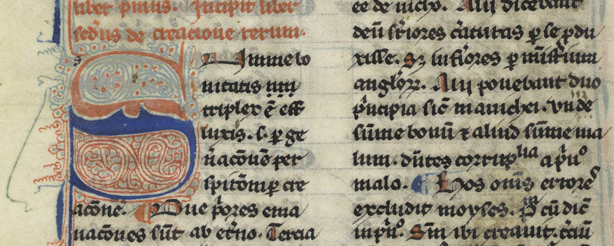
Hugh Ripelin, Compendium Theologicae Veritatis, p.24
Eventually, Caroline minuscule was revived by the Italian Humanists in the fifteenth century, who wrongly believed that it was the script used by the ancient Romans. This adapted version of Caroline minuscule, which came to be known as Humanistic minuscule, in turn inspired many of the typefaces used by early printers. The very modern- and familiar-looking typeface below is representative of many books printed during this early period.
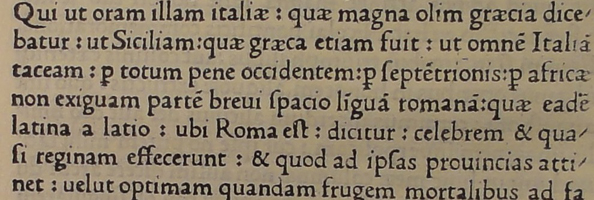
Lorenzo Valla, Elegantiae Linguae Latinae, Venice: Rubes, 1476
These typefaces, though they were subject to changing tastes over the centuries, became the basis for the fonts that we use today. The way we read and write, then, descends directly from the innovations adopted and adapted during the Middle Ages, especially the time of Charlemagne.
To see some of these documents in person, please join us for the exhibition Papal Parchments and Blackletter Books: How the Middle Ages Shaped the Way We Read, 1245 AD to UBC, which runs from May 1-31, Monday through Friday, 10 a.m. to 4 p.m. at Rare Books and Special Collections on the first floor of the Irving K. Barber Learning Centre. For more information, please contact Rare Books and Special Collections at 604 822-2521 or rare.books@ubc.ca.
No CommentsMore medieval fun (online)
Posted on May 20, 2015 @9:32 am by Chelsea Shriver
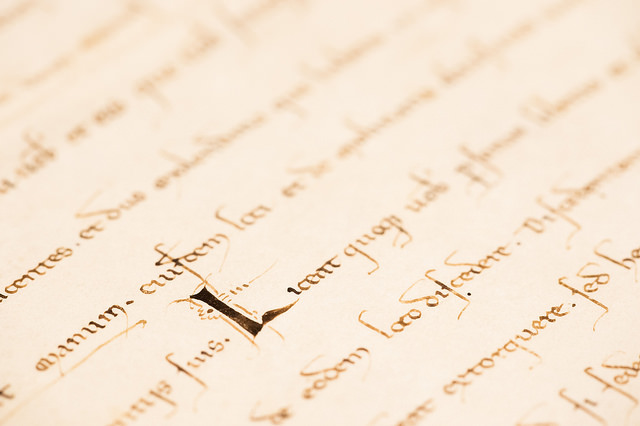
Papal bull of Pope Innocent IV
We’re pretty proud of our library and archival school here at UBC. Rare Books and Special Collections benefits greatly from the talented students that take on co-ops, work learn positions, and special projects here. Our new exhibition, Papal Parchments and Blackletter Books, was curated by current library student, Robert Makinson, and a fellow student (and a great designer) kindly offered to create a web-based exhibition catalogue for the project. You can browse Anne Darby’s site and learn more about medieval manuscripts and the RBSC exhibition here.
Papal Parchments and Blackletter Books is free and open to the public, and runs from May 1-31, Monday through Friday, 10 a.m. to 4 p.m. at Rare Books and Special Collections on the first floor of the Irving K. Barber Learning Centre. We hope to see you there!
No CommentsHow It’s Made: Medieval Manuscripts
Posted on May 19, 2015 @1:04 pm by Chelsea Shriver
In honour of our new exhibition, Papal Parchments and Blackletter Books, here’s a lesson on how medieval manuscripts were made, courtesy of the exhibition’s curator and a student in UBC’s School of Library, Archival, and Information Studies, Robert Makinson.
How Manuscripts Are Made
Manuscript leaves are usually made from vellum, a term denoting calfskin; other animal skins were also used, however, and these are properly called parchment. Their material makes manuscript pages much thicker and heavier than paper, so they resist tearing and other forms of trauma better, but they react badly to changes in temperature and humidity: this causes the wrinkles and wave patterns you sometimes see in damaged manuscripts.
When the animal had been skinned, the material was submerged in a lime solution for several days, which prepared it to receive inks and pigments; afterwards it was stretched upon a wooden frame to dry evenly. Then pages were cut from the skin, and the artisan used a knife to remove hair from the “outside” of the skin and a pumice stone to reduce imperfections. If you look carefully, you can actually tell which side of the skin you are looking at, thanks to scars, veining, and other marks! Usually, these sheets were folded one or more times, creating what we call folios or quartos; many were gathered and bound together to make the manuscript. The front and back of each sheet were called the recto and verso, respectively.

Book of Hours, Paris: c. 1510, fragment Av, with several shades of ink
There were several kinds of inks used during the medieval period:
- Similar to modern inks because they adhere to the surface of the material, carbon gums were used for most early manuscripts, and were made by mixing carbon-based materials like charcoal or lamp-black with a thickening agent like gum arabic.
- Later manuscripts were usually written with iron galls, which were made by combining tree galls, usually from oaks, and iron from nearly any source. They were much more cheaply made and used almost exclusively in the later Middle Ages, but they can cause more damage to manuscripts and fade to brown over time. Most manuscripts in this exhibition were written with iron gall inks.
- Red inks were made by pouring acidic substances like vinegar or urine on lead sheets and repeating the process until the desired hue was achieved. The process usually took several weeks, but since red inks were necessary for rubrication, this was a fairly common practice.
- There are dozens of different medieval recipes for making other colours of ink, and they vary widely in materials and manufacturing processes.
Pigments were used for illuminated manuscripts that feature colourful illustrations. Our collection does not have much illumination, but like coloured inks, these pigments come from a wide variety of sources: some were naturally-occurring compounds, while others were manufactured artificially. Certain pigments have weathered the years better than others, since they can fade, dissolve, or even explode without proper storage conditions!
To see some of these incredible documents in person, please join us for the exhibition Papal Parchments and Blackletter Books: How the Middle Ages Shaped the Way We Read, 1245 AD to UBC, which runs from May 1-31, Monday through Friday, 10 a.m. to 4 p.m. at Rare Books and Special Collections on the first floor of the Irving K. Barber Learning Centre. For more information, please contact Rare Books and Special Collections at 604 822-2521 or rare.books@ubc.ca.
No CommentsNew exhibition: Papal Parchments and Blackletter Books
Posted on May 15, 2015 @3:33 pm by Chelsea Shriver
Rare Books and Special Collections at UBC Library announces a new exhibition!
Papal Parchments and Blackletter Books: How the Middle Ages Shaped the Way We Read, 1245 AD to UBC
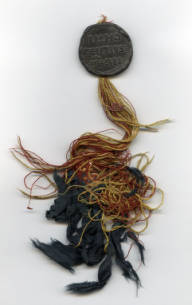
Bull of Innocent IV, Lyons, 1245, seal
This fascinating exhibition tells the medieval and early modern story of the written word using RBSC’s fantastic collection. Two recent acquisitions are of particular note: a papal “bull,” or legal decree, issued by Pope Innocent IV in 1245 (whose seal is depicted at the right); and a textbook used at the University of Paris during the late thirteenth century. But the exhibition also showcases pieces that have been here for decades, such as a single leaf from the Catholicon, a Latin dictionary probably printed in 1460 by Johannes Gutenberg, the inventor of typography. We also have a 1331 legal document donated to the library by the Bulwer family, whose ancestors are named in the manuscript and who moved from England to Vancouver in 1887.
The items found in this exhibition also explore the intersection between manuscripts and early books called incunabula (English “incunables”), texts printed during the period 1450-1500: the Biblia Pauperum (“Bible for the Poor”) is a printed book bound in the remnants of a medieval manuscript; and our copy of the Roman emperor Justinian’s Institutes has many annotations added by hand and even has fragments of an old manuscript book in its binding!
These pieces were produced over a period of nearly three hundred years, from 1245 to 1525, and together they tell the story of the written word as it moved towards the forms we use today. But we are part of the story too, moving that history forward as we write in English, French, or any of the other European languages.
You can explore the objects featured in the exhibition through the gallery below, but there is nothing quite like experiencing these treasures in person. The exhibition, which is free and open to the public, runs from May 1-31, Monday through Friday, 10 a.m. to 4 p.m. at Rare Books and Special Collections on the first floor of the Irving K. Barber Learning Centre. For more information, please contact Rare Books and Special Collections at 604 822-2521 or rare.books@ubc.ca.
-
- Bull of Innocent IV, Lyons, 1245. BX1547 .T74 C373 1245
-
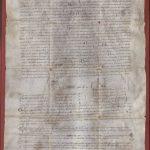
- Reproduction of Bull of Innocent IV, 1319. Innsbruck Tiroler Landesarchiv, Urk. I 493
-
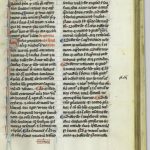
- Hugh Ripelin, Compendium Theologicae Veritatis, France, c. 1300. BX 890 .H76 1320
-
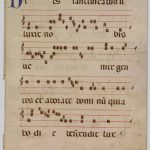
- Gradual, c. 1450. M2148 .L4 I8 1400
-
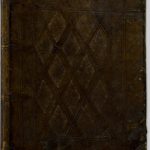
- Martianus Capella, De Nuptiis Philologiae et Mercurii et al., 1500. PA 6511 .M2 1500
Views of Yokohama Exhibition
Posted on April 7, 2015 @2:33 pm by Chelsea Shriver
An exhibition of Yokohama woodcut maps from the Tokugawa period is on display at Rare Books and Special Collections from April 1st to 30th, 2015. This exhibition is part of a series of events to celebrate the 50th anniversary of Vancouver’s sister-city relationship with Yokohama.
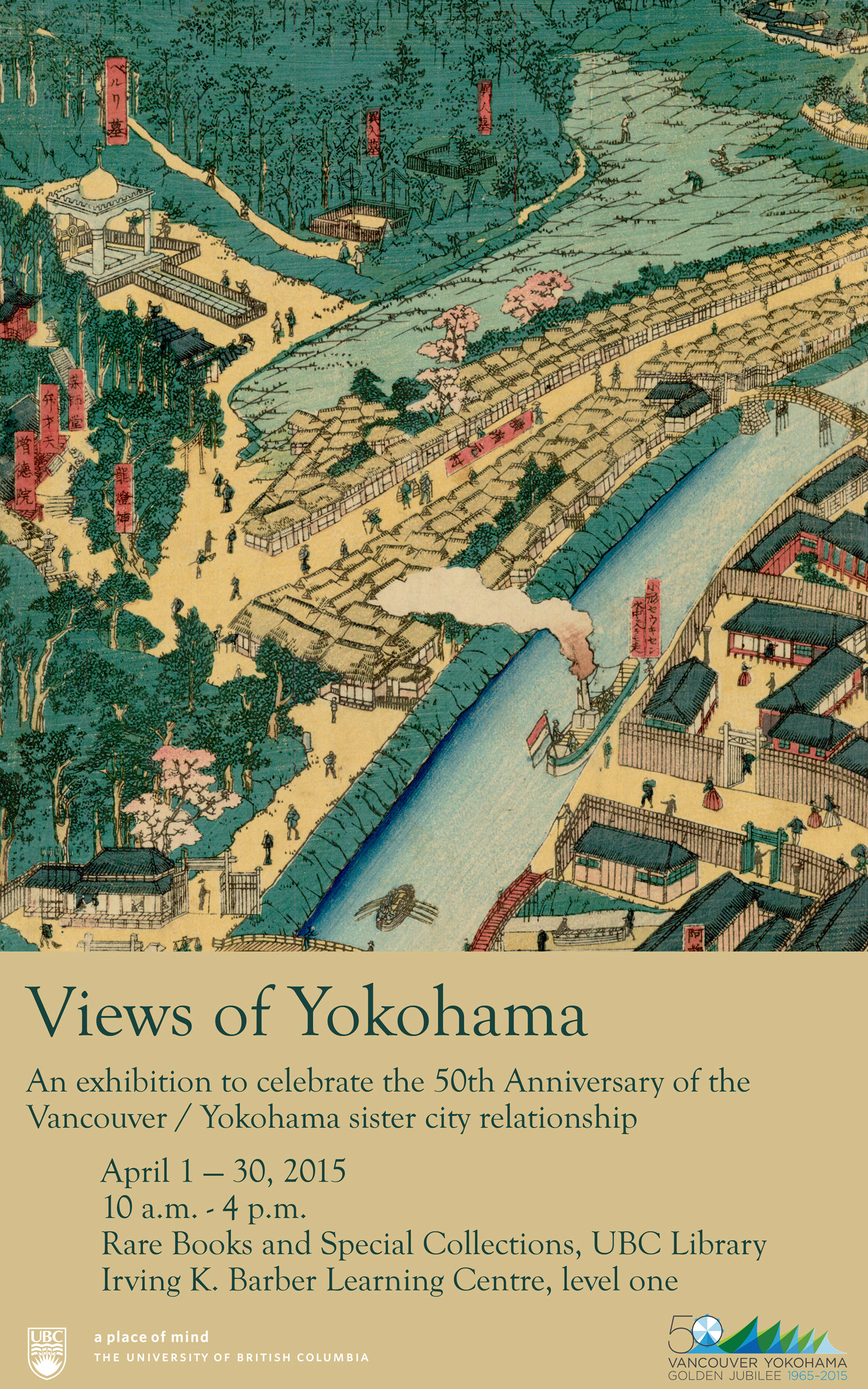
Exhibition Poster
The exhibition is free and open to the public, and can be viewed 10am-4pm Monday through Friday, and 12pm-5pm on Saturday, April 11th and 18th.
For more information, contact Rare Books and Special Collections at 604-822-2521 or rare.books@ubc.ca.
Information about other Vancouver Yokohama Golden Jubilee 1965-2015 events are available here.
No CommentsOscar Wilde Exhibition
Posted on February 28, 2017 @12:35 pm by kferrante
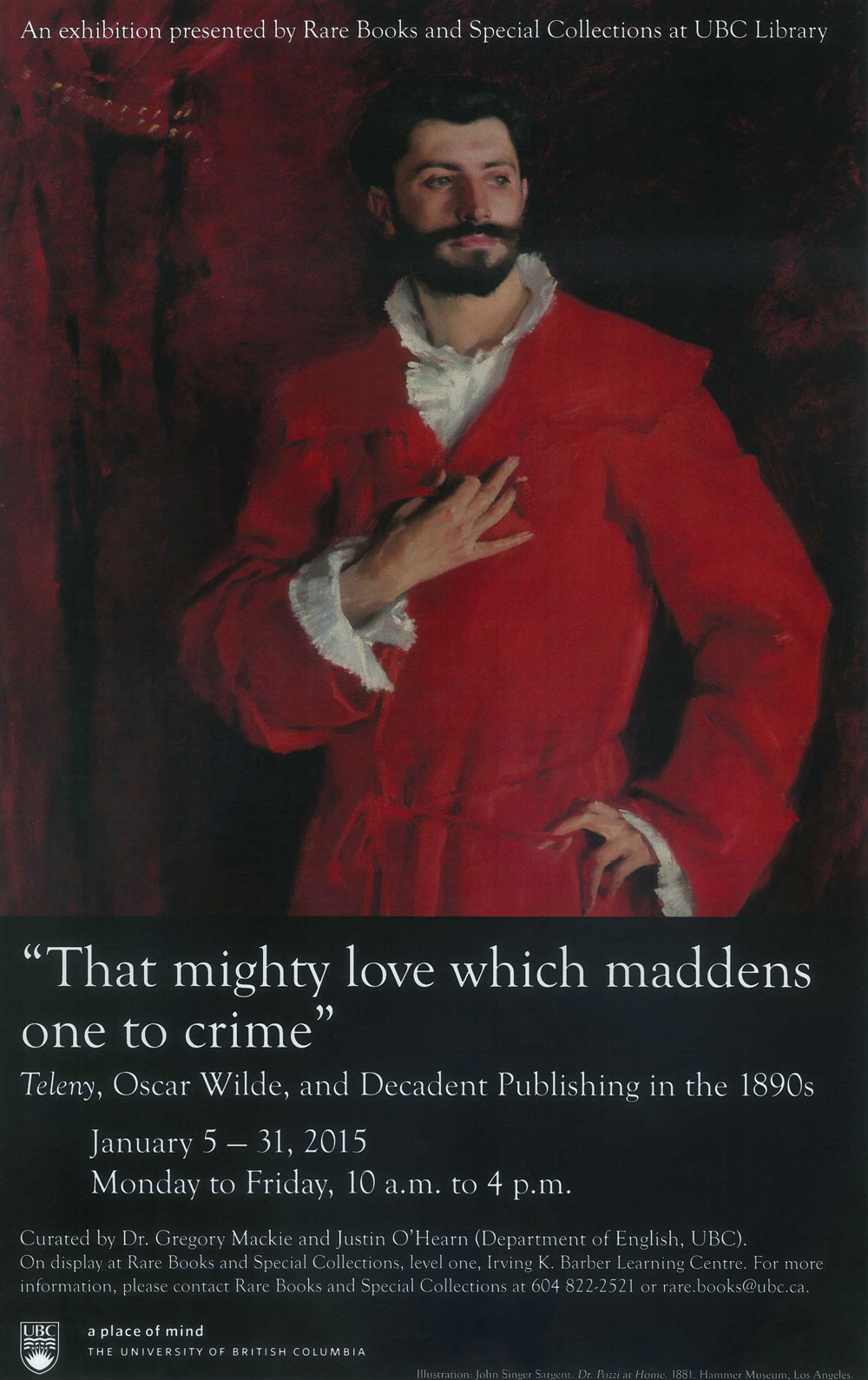 A new exhibition is on display this month at Rare Books at Special Collections, featuring rare publications of works by Oscar Wilde:
“That mighty love which maddens one to crime,” Teleny, Oscar Wilde, and Decadent Publishing in the 1890s
This exhibition will be on display until January 31, 2014, and is free and open to the public Monday to Friday, 10 a.m. to 4 p.m.
For more information, contact Rare Books and Special Collections at 604-822-2521 or rare.books@ubc.ca.
No Comments
Relive the fun…and the food!
Posted on December 9, 2014 @11:04 am by Chelsea Shriver
If you weren’t able to join us for Robert Sung’s funny and fascinating talk on December 19 entitled “Food in Transit,” you’re in luck! Thanks to the Irving K. Barber Learning Centre, the talk is now available to watch online:
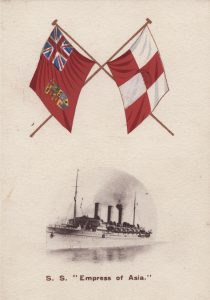
1922 menu from the CPR’s Empress of Asia
http://www.ikebarberlearningcentre.ubc.ca/food-in-transit-by-robert-sung/
Sung’s entertaining and educational talk included personal stories of immigration, cultural and culinary exchange, and Vancouver’s local food history.
A fourth-generation Canadian, Robert Sung has a passion for culinary arts and history. For over twenty-five years, Sung’s personal and business life have revolved around the food and hospitality industry. As the owner and founder of Robert Sung Tour, Sung provides culinary walking adventures through Vancouver’s Chinatown. He is co-president of the Chinese Canadian Historical Society of British Columbia, a member of the Vancouver Chinatown Revitalization Committee, and serves as an advisor to the Asian Heritage Month Society. Sung is also a contributor to the book Eating Stories: A Chinese Canadian and Aboriginal Potluck, a collection of stories about family gatherings, home cooking, and restaurant outings.
And be sure to visit the exhibition that inspired the talk: “Bon Voyage / Bon Appétit: Menus from the Canadian Pacific Railway Company’s Ships, Trains, Planes, and Hotels.” Whether you prefer quick eats or fine dining, you’re sure to enjoy this display of eye-catching and mouth-watering Canadian Pacific Railway Company menus dating from the 1890s through the 1980s from the renowned Wallace B. Chung and Madeline H. Chung Collection. The exhibition, which will be on display through December 24, 2014, is free and open to the public Monday through Friday from 10 a.m. to 4 p.m. in the Chung Collection exhibition in Rare Books and Special Collections, level one, Irving K. Barber Learning Centre.
No CommentsNew exhibition : Dorothy Burnett Book Binding Tools
Posted on February 28, 2017 @12:35 pm by kferrante
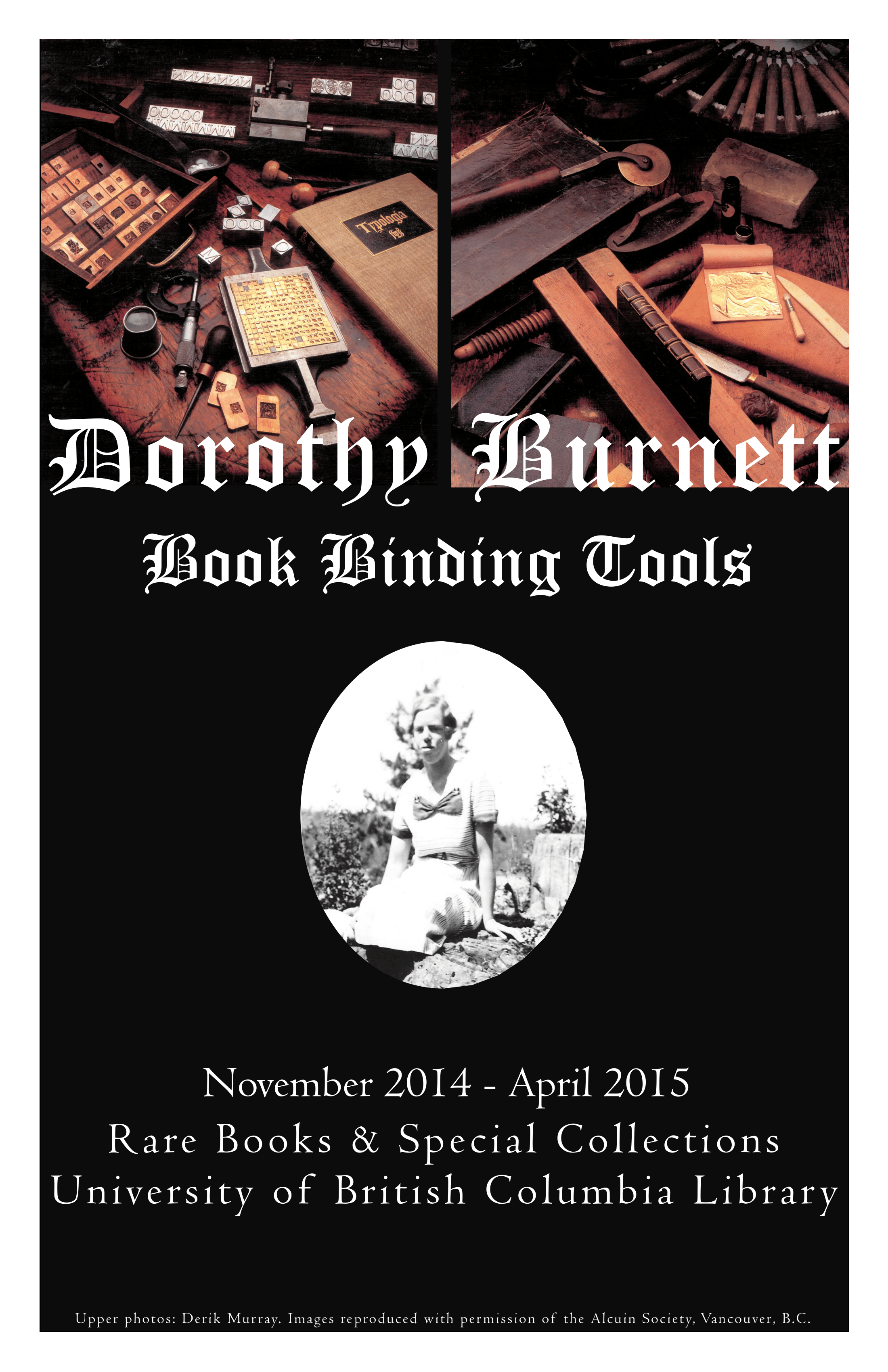
A new exhibition is now on display at Rare Books & Special Collections. This exhibition features book binding tools used by one of the first book binders in Vancouver, Dorothy Alcorn Burnett. Dorothy graduated from the Vancouver School of Decorative and Applied Arts (now Emily Carr University) in 1930. She left her tools, plus a number of books that she made, to the library and we are excited to be able to share this collection, giving a unique glimpse into the fine art of making books.
The exhibition will be on display until April 2015 in the reading room at Rare Books & Special Collections. It is free and open to the public, and can be viewed 10am-4pm Monday through Friday, and 12pm-5pm on Saturdays.
No CommentsBon Voyage / Bon Appétit
Posted on May 5, 2014 @10:59 am by Chelsea Shriver
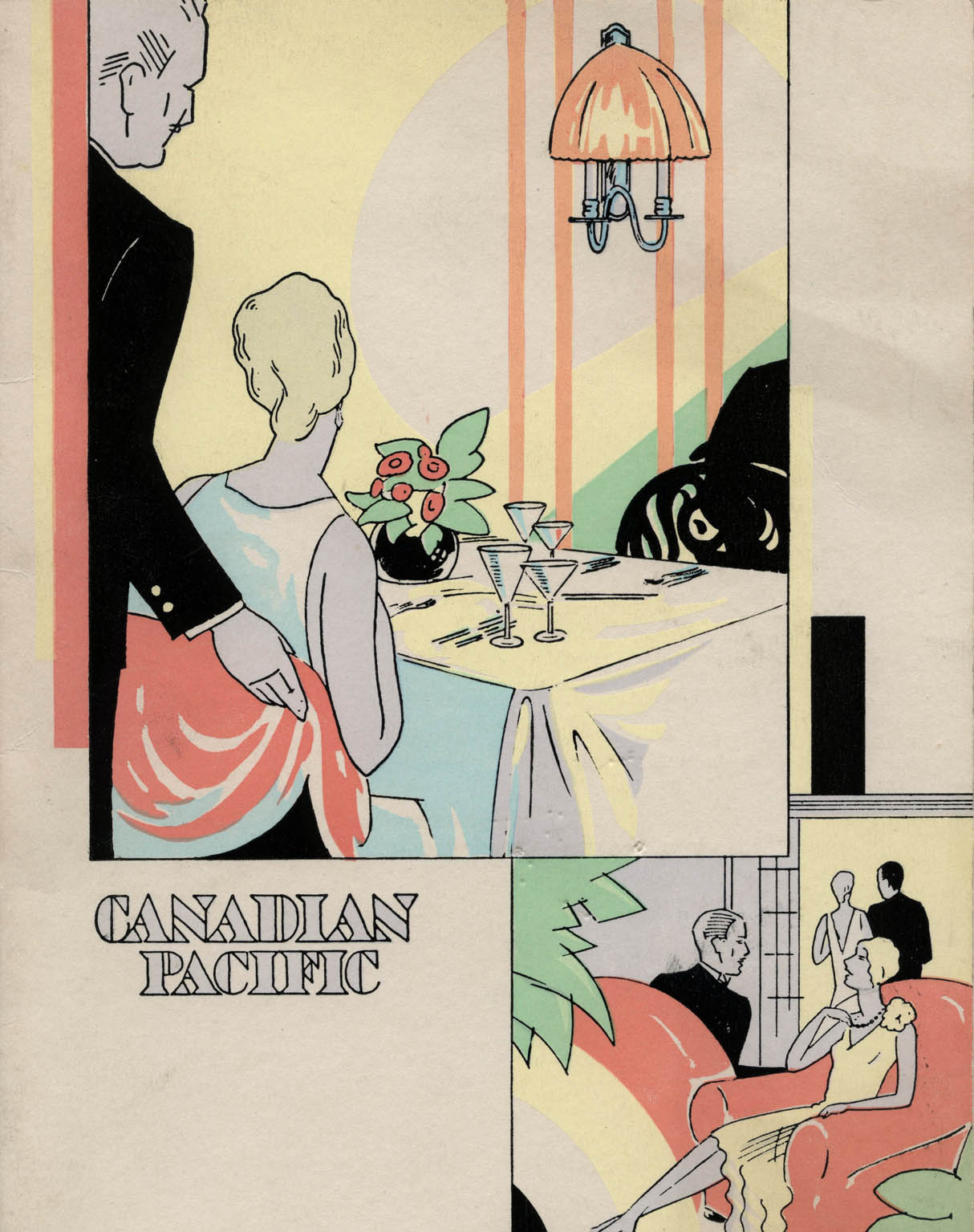
“Menu from the Empress of Russia,” 1930 from the Chung Collection CC-TX-225-56-7
Whether you prefer quick eats or fine dining, you’re sure to enjoy Bon Voyage / Bon Appétit: Menus from the Canadian Pacific Railway Company’s Ships, Trains, Planes, and Hotels, RBSC’s new exhibition of eye-catching and mouth-watering Canadian Pacific Railway Company menus dating from the 1890s through the 1980s from the renowned Wallace B. Chung and Madeline H. Chung Collection.
The exhibition, which will be on display until the end of December 2014, is free and open to the public Monday through Friday from 10 a.m. to 4 p.m. in the Chung Collection exhibition in Rare Books and Special Collections, level one, Irving K. Barber Learning Centre.
Read more about the exhibition and its guest curator, historian Larry Wong, here!
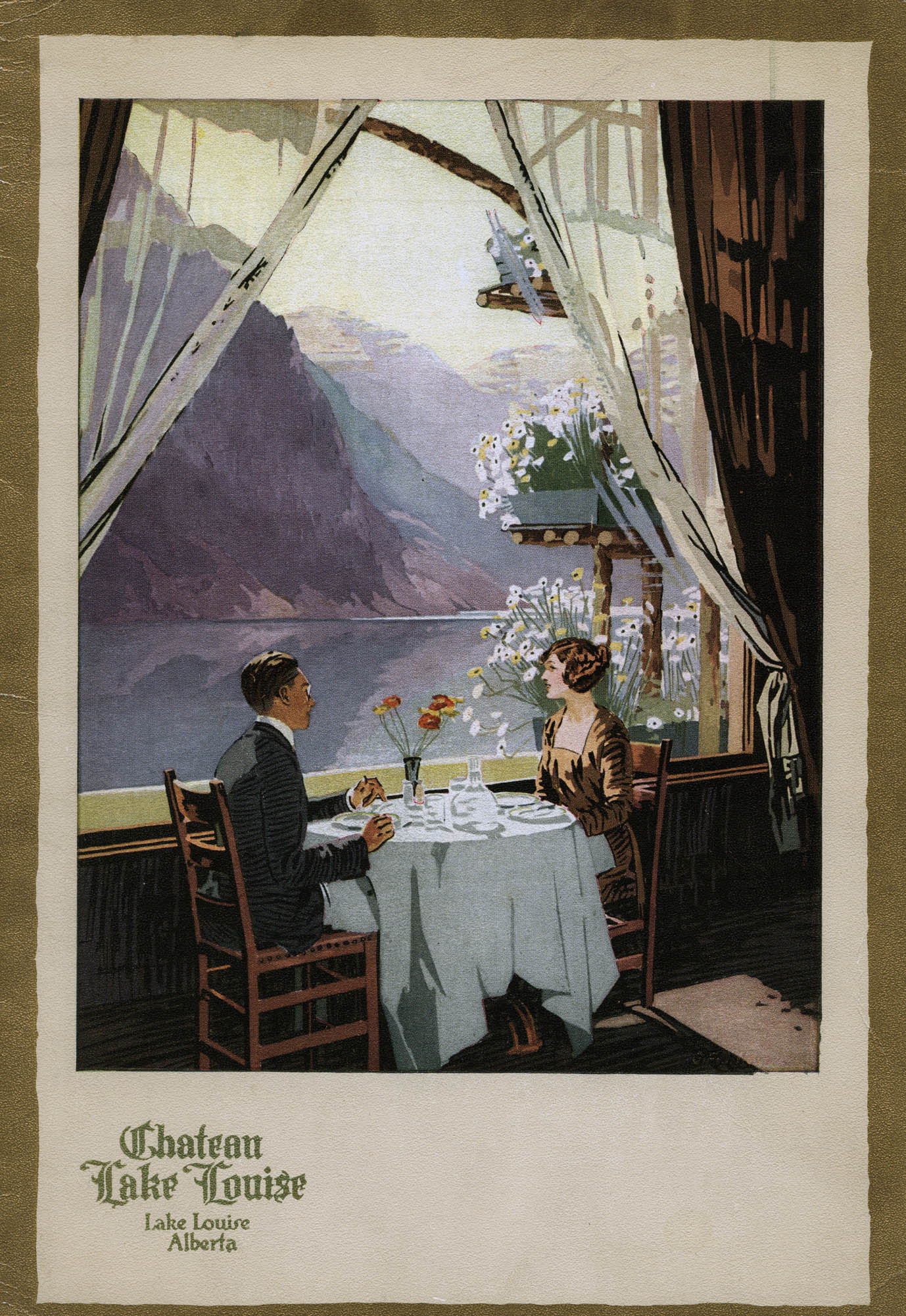
“Lunch menu from Chateau Lake Louise,” 1929 from the Chung Collection CC-TX-197-10-1
No Comments